Notting Hill Mews Access Problems for Gardeners Fixes: Practical Solutions for Tight Entrances, Shared Passages and Tricky Jobs
Gardening in Notting Hill can look deceptively simple from the street. A neat front wall, a tucked-away gate, a shared mews passage, maybe a basement courtyard full of pots and trailing jasmine. Then the job starts, and the access problem shows itself. Big tools do not fit. Compost bags need carrying through narrow routes. Neighbours are in and out. Parking is limited. And if the garden sits behind a converted mews house, the whole visit can become a puzzle before a spade even touches the soil.
This guide explains Notting Hill mews access problems for gardeners fixes in plain English: what usually goes wrong, why it matters, and how to make the work smoother without turning the day into a logistical headache. If you are a homeowner, landlord, property manager, or gardener trying to plan a visit, you will find practical fixes, sensible workarounds, and a few things people often overlook. Truth be told, access is half the job in these properties.
Table of Contents
- Why Notting Hill mews access problems for gardeners fixes Matters
- How Notting Hill mews access problems for gardeners fixes Works
- Key Benefits and Practical Advantages
- Who This Is For and When It Makes Sense
- Step-by-Step Guidance
- Expert Tips for Better Results
- Common Mistakes to Avoid
- Tools, Resources and Recommendations
- Law, Compliance, Standards, or Best Practice
- Options, Methods, or Comparison Table
- Case Study or Real-World Example
- Practical Checklist
- Conclusion
- Frequently Asked Questions
Why Notting Hill mews access problems for gardeners fixes Matters
In a place like Notting Hill, the garden itself is often only part of the challenge. The access route can determine whether a routine maintenance visit is calm and efficient or awkward and messy. Narrow mews lanes, small side gates, steep steps, basement lightwells, shared courtyards, and locked communal entrances all change how a garden is serviced.
Why does that matter so much? Because access affects time, safety, the amount of equipment that can be brought in, how waste is removed, and even whether the work can be completed in one visit. A lawn mow sounds straightforward until you realise the mower needs to be carried through a hallway, round a corner, and down some old stone steps while avoiding muddy footprints on pale flooring. Not ideal.
Access also has a knock-on effect on customer satisfaction. If the gardener arrives unprepared, the job starts late. If waste cannot be removed easily, the site can look untidy at the end of the visit. If neighbours are not warned about shared areas, tensions creep in. In mews properties, small frictions become big ones quite quickly.
That is why good access planning is not a luxury. It is part of professional garden care, especially when you are dealing with compact, high-value, closely packed London properties where discretion and tidiness matter.
If you are arranging ongoing care, it can help to view access as part of the service specification itself. Many property owners pair access planning with garden maintenance or broader services overview planning so that visits are realistic from day one.
How Notting Hill mews access problems for gardeners fixes Works
The basic idea is simple: understand the site before the visit, reduce friction where you can, and bring the right kit for the route rather than for an idealised garden on paper. In practice, the best fixes usually fall into four areas: planning, equipment choice, waste handling, and communication.
1. Planning the route, not just the task
Start with the journey from street to garden. Where does the gardener enter? Is there a side gate, shared passage, rear alley, or internal route through the property? Can the gate open fully? Are there narrow turns or steps? Is there enough space to stage bags, tools, and waste without blocking anyone?
A quick walk-through before the first service often solves half the issue. Even a few photographs sent ahead of time can prevent surprises. This is especially useful for basement courtyards and split-level mews gardens, where the sightline from the entrance to the work area is not obvious.
2. Matching tools to the access route
Not every tool is a good fit for compact London access. Full-sized wheeled machines are brilliant on open plots, but they can be clumsy in tight mews courtyards. Sometimes the better answer is a smaller mower, hand tools, folding equipment, or modular kit that can be carried in sections. It may sound less glamorous, but it often gets the job done more cleanly and with less disruption.
For jobs involving heavy cuttings or repeated visits, a team may also adjust the method. For example, hedge work might be done in smaller sections so waste can be bagged progressively rather than left in one awkward pile. In properties where overgrowth is part of the problem, a more structured clearance approach can be sensible, using garden clearance before the regular maintenance rhythm begins.
3. Handling waste without making a mess
Waste removal is one of the most underestimated access issues. If a garden is only reachable through a narrow interior route, every branch, bag of cuttings, and pile of leaves has to move through the same bottleneck. The fix is usually to reduce the volume moved at any one time. Bag as you go. Cut to manageable lengths. Use smaller containers. Keep a clean drop cloth where needed. Simple, but effective.
In some cases, the route from garden to disposal point needs to be protected carefully to avoid muddy footprints or scratches. That is where a bit of preparation pays for itself. Let's face it, nobody wants a tidy rose bed and a scuffed hallway in the same booking.
4. Keeping neighbours and building users in the loop
Shared access is rarely just a technical issue. It is a people issue as well. Mews buildings often involve neighbours, tenants, cleaners, delivery drivers, or building managers using the same passage. A short heads-up about timing, gate access, or temporary clutter helps avoid friction. In a close-knit street, that goes a long way.
Good communication also supports punctuality. If a gate code changes or a car blocks the passage, the gardener knows early instead of losing ten minutes standing outside with a hedge trimmer in hand. Not glamorous, but very real.
Key Benefits and Practical Advantages
When access is handled properly, the benefits show up quickly. The garden looks better, the work finishes faster, and everyone involved has an easier time. There is also a quieter benefit: the whole service feels more professional.
- Less disruption: careful planning reduces noise, movement, and repeated trips through narrow spaces.
- Safer working conditions: fewer awkward lifts, fewer trips over steps, and better control of tools and waste.
- Cleaner finishes: better route planning means less soil, leaf litter, and debris carried indoors.
- More reliable timing: a prepared access route helps gardeners estimate duration more accurately.
- Better neighbour relations: considerate movement through shared mews access reduces complaints and misunderstandings.
- Lower risk of damage: tight routes require care, but the risk of knocking walls, railings, or painted surfaces drops when the method is right.
There is another upside that people often miss: once access is properly mapped, regular care becomes much easier to schedule. A narrow side return that felt like a barrier for a one-off visit may become perfectly manageable once everyone knows the route, the timings, and the tool setup. Familiarity helps.
If you need ongoing help, combining access planning with lawn mowing, hedge trimming, or wider landscaping work can make each visit more predictable.
Who This Is For and When It Makes Sense
This topic is most relevant if you are dealing with one of the following situations:
- a Notting Hill mews house with rear or side access only
- a basement garden or courtyard below street level
- a shared passage used by multiple residents
- a property with narrow gates, steps, or awkward turns
- a garden that needs regular maintenance but is hard to reach with standard equipment
- a landlord or managing agent trying to reduce service delays and avoid complaints
- a gardener planning visits to compact, high-spec London homes where cleanliness matters
It also makes sense if the garden is not especially large but is fiddly. Small gardens can still be hard work when every move has to be choreographed. In fact, they can be more demanding than bigger spaces because there is less room for error.
Homeowners usually want convenience and minimal fuss. Gardeners want a route that lets them work safely and efficiently. Property managers want consistency and fewer tenant issues. Everyone is after the same thing, really: a neat result without drama.
Step-by-Step Guidance
Here is a practical way to deal with mews access issues before the job starts. It is not complicated, but it does need a bit of discipline.
- Assess the access route in detail. Walk the entrance, passage, steps, gate, and final approach to the garden. Note narrow points, surfaces that might be slippery, and any shared-use pinch points.
- Identify what has to move through the route. Tools, bags, planters, ladders, green waste, soil, and replacement materials all need different handling. Do not assume a standard setup will work.
- Measure the awkward bits. Gate width, stair depth, turning space, and head clearance can all change the equipment choice. A few centimetres matter more than people expect.
- Choose the right method. For example, use compact machines for mowing, hand tools for tight beds, or staged removal for pruning waste. A big all-in-one approach usually struggles here.
- Agree the timing. Early slots can help avoid pedestrian traffic, deliveries, and neighbour overlap. Evening work is sometimes possible, but it depends on the property and the noise involved.
- Protect the route. Use mats, coverings, or careful staging if the route passes through indoor or decorative areas. This is especially useful where finishes are light or recently renovated.
- Plan waste exit before waste entry. Know where cuttings will be stacked, bagged, and removed. If the exit path is the same as the entry path, keep it clear throughout.
- Review after the first visit. A short debrief after the initial job often reveals small fixes that make later visits much smoother. Maybe the gate sticks. Maybe the mower is too wide. Maybe a different entrance is better. Tiny stuff, but useful.
A simple site note sheet can save time on future visits. Nothing fancy. Just the access point, key holder, gate code, waste route, and any no-go areas. Old-school? Maybe. Effective? Absolutely.
Expert Tips for Better Results
Here are the small adjustments that tend to make the biggest difference in Notting Hill mews gardens. Some are obvious once you hear them, but they are easy to forget in the rush of a busy day.
Use lighter, modular kit where possible
Compact equipment is not a downgrade. It is often the smarter choice in confined properties. Smaller tools reduce strain, improve control, and make it easier to move quietly through shared areas. If a job does not require heavy machinery, do not drag it in just because it looks more efficient on paper.
Work from the inside out
In awkward-access gardens, it can help to clear, prune, or mow in a sequence that keeps the route open. If waste starts piling near the only exit, you create your own bottleneck. That is one of those mistakes people only make once, usually on a damp Tuesday when everything feels heavier than expected.
Bag and stage waste in smaller loads
Smaller loads are easier to carry, quicker to remove, and less likely to split or spill. This matters a lot in mews properties where the route may pass close to painted walls, polished floors, or shared entrances. Little and often is not glamorous, but it works.
Agree a fallback access option
If one entrance is blocked, what is plan B? A second key, an alternate gate, or a building manager contact can rescue a visit that would otherwise stall. You do not want to be improvising in the rain while a pile of cuttings sits there looking at you. It is a very British sort of problem, really.
Keep the first visit lighter than usual
For a new property, start with a more conservative scope than you might use elsewhere. That gives you room to learn the site without overcommitting. Once the access pattern is understood, you can often do more on later visits.
For gardens that are overgrown or cluttered, pairing access planning with garden clearance can reset the site and make future maintenance far easier. It is often the cleanest way to regain control, especially after a long gap between visits.
Common Mistakes to Avoid
Most access problems are not caused by one major failure. They come from a collection of small assumptions. Here are the ones we see most often.
- Assuming the route is obvious: a gardener may know the area generally, but every mews property has its own oddities.
- Bringing the wrong size equipment: if a mower or ladder cannot turn in the passage, it is not the right tool for that site.
- Ignoring waste logistics: a tidy garden can still become messy if cuttings are not handled in stages.
- Forgetting shared access: other users of the mews need space and notice, especially during busy hours.
- Not protecting indoor routes: one muddy wheel track through a hallway can spoil a good job quickly.
- Underestimating steep steps: steps change the physical effort involved and can make carrying loads unsafe if rushed.
- Leaving the first visit too ambitious: starting with too much work can expose access issues halfway through the job.
And yes, sometimes the mistake is just not asking enough questions in advance. It happens. Everyone wants to keep things moving, and then the hedge trimmer turns out to be the size of a small suitcase that no one mentioned.
Tools, Resources and Recommendations
You do not need exotic kit to solve most access issues. In fact, simplicity is often the winner. The most useful resources are usually practical rather than flashy.
- Compact hand tools: useful for trimming, edging, deadheading, and detail work where space is tight.
- Lightweight, manageable bags: better for waste removal through narrow routes.
- Protective floor coverings or mats: helpful when moving through indoor or semi-indoor routes.
- Site notes and photos: a few clear reference pictures can help the next visit run smoothly.
- Measured access checks: simple measurements of gate width, stair width, and turning circles are often enough to guide planning.
- Regular maintenance schedules: keeping on top of growth reduces the amount of material moved each time.
For recurring visits, many people find it useful to align access planning with broader service planning through garden maintenance or services overview discussions. It keeps expectations tidy, which is half the battle.
If the work includes structural or design changes, you may also need landscape gardening or even limited decking services planning, especially where access and usable space need to be improved together.
Law, Compliance, Standards, or Best Practice
Because this topic involves physical access, waste movement, and shared residential spaces, best practice matters even when the job looks small. In the UK, gardeners and property managers should think carefully about safe manual handling, trip hazards, property damage, and reasonable care for shared areas.
You do not need to turn a garden visit into a legal seminar, but some basics are worth keeping in mind:
- Manual handling: heavy or awkward loads should be moved in a way that reduces strain and avoids unsafe lifting.
- Site safety: uneven ground, wet steps, and tight turns should be treated as real hazards, not minor annoyances.
- Noise and neighbour consideration: timings should be chosen with respect for residents, especially in tightly packed mews streets.
- Insurance and responsibility: property access work should be backed by sensible insurance and a clear understanding of who is responsible for what.
- Accessibility awareness: if a site has restricted or complex access, it is worth thinking about how that affects occupants, visitors, and workers with mobility concerns.
For businesses, documents such as an insurance and safety page and a clear health and safety policy help show that access issues are being managed professionally. An accessibility statement can also be useful where customers need clarity about how site entry and service delivery are handled.
Best practice is not about overcomplicating things. It is about showing that the route into the garden has been thought through, not guessed at. That bit matters.
Options, Methods, or Comparison Table
Different access problems call for different fixes. Here is a simple comparison to help you judge what usually works best.
| Method | Best for | Pros | Limitations |
|---|---|---|---|
| Compact hand tools | Tight beds, courtyards, detailed cutting | Highly controllable, easy to carry, low disruption | Slower for large-scale clearance |
| Small wheeled equipment | Narrow paths and modest lawn areas | Efficient for repeat visits, easier than full-size machines | May still struggle with steps or sharp turns |
| Sectional waste removal | Hedge work, pruning, overgrown gardens | Reduces clutter and keeps routes usable | Needs more planning during the job |
| Pre-visit access check | New properties, shared mews, unfamiliar layouts | Prevents surprises and helps choose the right kit | Takes a little time before the first visit |
| Landscape redesign | Repeated access pain points, poor route layout | Can improve long-term usability and maintenance | Requires more investment and planning |
For many homes, a hybrid approach works best. A small mower for the lawn, hand tools for the edges, and staged waste removal for the cuttings. That is often enough. If access remains awkward every single time, a more structural fix may be worth exploring through landscaping or related design work.
Case Study or Real-World Example
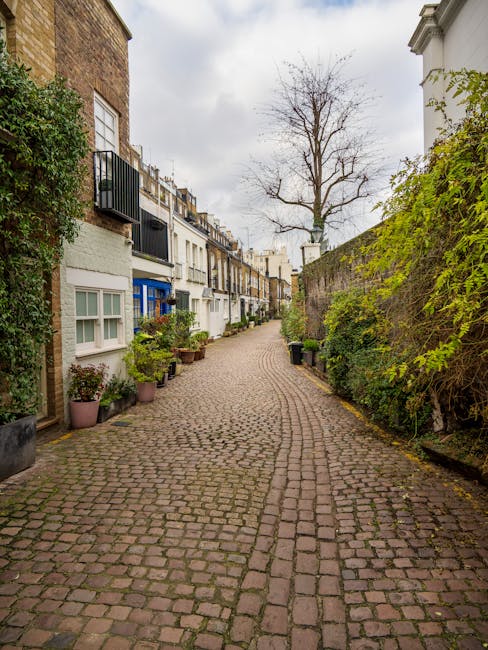
Picture a typical Notting Hill mews property: front entrance on a narrow street, garden hidden behind the house, and the only route is through a side passage shared with a neighbour. The garden itself is not huge, but it has a long border, a small lawn, and a couple of mature shrubs that have been left a bit too long between visits.
On the first visit, the gardener arrives with standard-sized equipment and quickly realises the mower is awkward to turn in the passage. The waste bags are fine individually, but the combined volume from hedge trimming and border clearing would block the exit route if left in one place. The shared gate also sticks a little, which slows the whole rhythm down.
The practical fixes are not dramatic. The gardener switches to smaller kit, trims the hedge in sections, and bags cuttings as they go. A mat is placed where the route passes indoors. The client agrees a slightly earlier start time for future visits so there is less foot traffic through the passage. A simple note is added for the gate code and the preferred access point.
Next time, the visit runs more smoothly. Not perfect, because real life rarely is, but much better. The lawn gets done, the borders look sharper, and the exit path stays clear. That is the kind of improvement that matters more than any shiny new gadget.
For sites that need a reset before routine care can work properly, pairing that initial tidy-up with garden clearance often makes the ongoing schedule far easier to manage. It can be a simple before-and-after difference, and you feel it immediately.
Practical Checklist
Use this checklist before the next garden visit in a mews property. It is simple, but it catches the usual problems.
- Confirm the exact access route from street to garden
- Check gate width, stair width, and any tight turning points
- Identify shared areas and whether neighbours need notice
- Choose tools that can physically fit the route
- Plan how waste will be bagged, staged, and removed
- Decide whether floor protection or mats are needed
- Agree the best time of day for the visit
- Confirm keys, codes, and contact details in advance
- Review any slippery surfaces, low walls, or step hazards
- Set a realistic scope for the first appointment
- Leave notes for future visits so the setup is repeatable
Expert summary: the best access fix is usually not one big solution. It is a chain of small, sensible adjustments that make the garden easier to reach, easier to work in, and easier to leave clean. Simple, yes. But in Notting Hill mews properties, simple is often what wins.
Conclusion
Notting Hill mews access problems for gardeners fixes are really about reducing friction. When the route is tight, shared, or awkward, the best outcome comes from planning ahead, choosing the right tools, and keeping the access route as tidy as the garden itself. That approach saves time, protects the property, and makes the whole job feel calmer.
Whether you are managing a one-off clearance or arranging ongoing maintenance, a little attention to access will usually pay back quickly. The garden looks better, the work feels smoother, and the people involved are far less likely to end up frustrated. And honestly, that is what most clients want: good work, no fuss, no drama, job done properly.
If your garden access feels more complicated than it should, start with a simple site review and build from there. The right fix is usually closer than it first appears.
Get a free quote today and see how much you can save.
Frequently Asked Questions
What are the most common access problems in Notting Hill mews gardens?
The most common issues are narrow gates, shared passages, basement steps, limited parking, awkward turns, and routes that pass through indoor or semi-indoor areas. Waste removal can also be a challenge.
How do gardeners work around very narrow entrances?
They usually use compact tools, smaller waste bags, staged removal, and a more careful work sequence. Sometimes the whole job is planned around the access route rather than the other way round.
Do mews access issues mean the garden cannot be maintained regularly?
Not at all. Most gardens can still be maintained, but the setup may need to be adapted. Once the access route is understood, ongoing maintenance is often easier than the first visit suggests.
Should I tell the gardener about access issues before the appointment?
Yes, definitely. A few photos, gate details, step counts, or notes about shared routes can save a lot of time and prevent the wrong equipment being brought.
What if waste cannot easily leave the property?
The usual fix is to reduce the volume carried at one time, bag cuttings more frequently, and stage waste so the route stays usable. If the property is badly overgrown, a clearance visit may help first.
Is special equipment needed for Notting Hill mews gardens?
Sometimes, yes. It is not about expensive kit so much as the right-sized kit. Smaller mowers, hand tools, and lightweight bags are often more useful than larger machines.
How can I stop muddy footprints or damage indoors?
Use floor coverings or mats where needed, keep tools and bags controlled, and plan the route carefully. It also helps to avoid carrying too much at once through clean internal spaces.
Are shared mews passages a problem for gardeners?
They can be if access is not communicated properly. Shared passages need consideration, timing, and clear movement so other residents are not disrupted.
When does landscaping become a better fix than routine maintenance?
If access keeps causing problems every visit, or if the layout itself is the issue, landscaping or a small redesign may be the better long-term solution. Sometimes the route needs improvement, not just the garden.
How should a first visit to a mews property be handled?
Keep it conservative. Assess the route, bring manageable equipment, and leave space to learn the site. A cautious first visit usually makes later work easier and safer.
Can access planning reduce costs over time?
It often can. Better planning usually means fewer delays, less wasted effort, and a more predictable job. That tends to make ongoing care more efficient, even if the first setup takes a little extra thought.
What documents or policies matter for professional gardening access work?
Clear safety, insurance, and accessibility information matter most. They help show that the route, the risks, and the customer journey have all been considered properly.
For more about the team and how we approach residential garden work, you may also find the about us page useful. If you are ready to talk through a tricky entrance or a complex mews layout, the contact us page is the simplest next step.